
Finding People Across Wake County
Start with the most specific fact already known. A street address belongs in the county parcel search. A party name or case number belongs in the court portal. A former address can be compared with a reverse directory from the same year. Family research often works best by joining an estate file, obituary, and later deed transfer. Each source answers a different question, so dates and record identifiers matter more than a loose name match.
Wake County is large enough that common names collide often. Add a middle initial, approximate year, municipality, school, parcel number, case number, or professional license number. Keep the source date with every result. A current tax owner, an older deed grantee, and a listed occupant may all be different people connected to the same address.
- Search the Wake Real Estate system by owner or address, then save the REID, PIN, mailing address, and deed reference.
- Use iMAPS to confirm the parcel, municipal boundary, and district before looking for town permits or police files.
- Search deed parties and eCourts with exact names plus documented spelling variants.
- Use voter, business, staff, or license records only for the facts each official source publishes.
- When an index fails, ask the custodian for its terminal, paper file, archive route, or a narrow existing record.
Note: A portal miss is not proof that no record exists; spelling, date range, custody, protected status, and digitization all affect results.
Wake County People Search Offices
Raleigh holds several layers of public administration because it is the county seat and North Carolina’s capital. The Wake Register of Deeds keeps recorded land instruments, assumed names, and county vital certificates. Tax Administration maintains assessment parcels. The Clerk of Superior Court keeps civil, criminal, estate, special-proceeding, and divorce case files. City and town departments remain the proper custodians for their own permits, planning matters, and releasable police records.
The detailed access rules, copy choices, and department request paths belong with Wake County public records. For a people search, first identify which office created the source. That one decision keeps a county deed search from being misrouted to a town clerk or a court file from being mistaken for a Register record.
Wake Register of Deeds
Recorded instruments, assumed names, and Wake vital certificates
Raleigh, North Carolina
Counter, mail, and online access
Wake Clerk of Superior Court
Civil, criminal, estate, divorce, and special-proceeding files
Wake County courthouse offices
Portal, terminal, file, and copy access
Wake Tax Administration
301 S. McDowell St., Suite 3800
Raleigh, NC
919-856-5400
Tax Administration information and parcel assistance
Wake County Parcel Name Search
Property records provide one of the strongest dated name-and-address links in Wake County. Search by owner, street, REID, or PIN. A parcel card can show owner names, the tax-mail address, the property address, deed book and page, transfer date, values, legal description, and sales links. The tax-mail address is where county correspondence goes. The situs address is the land or building location. Neither field alone proves who lives on the parcel. The Wake Real Estate Search shown here accepts owner, address, REID, and parcel identifiers.
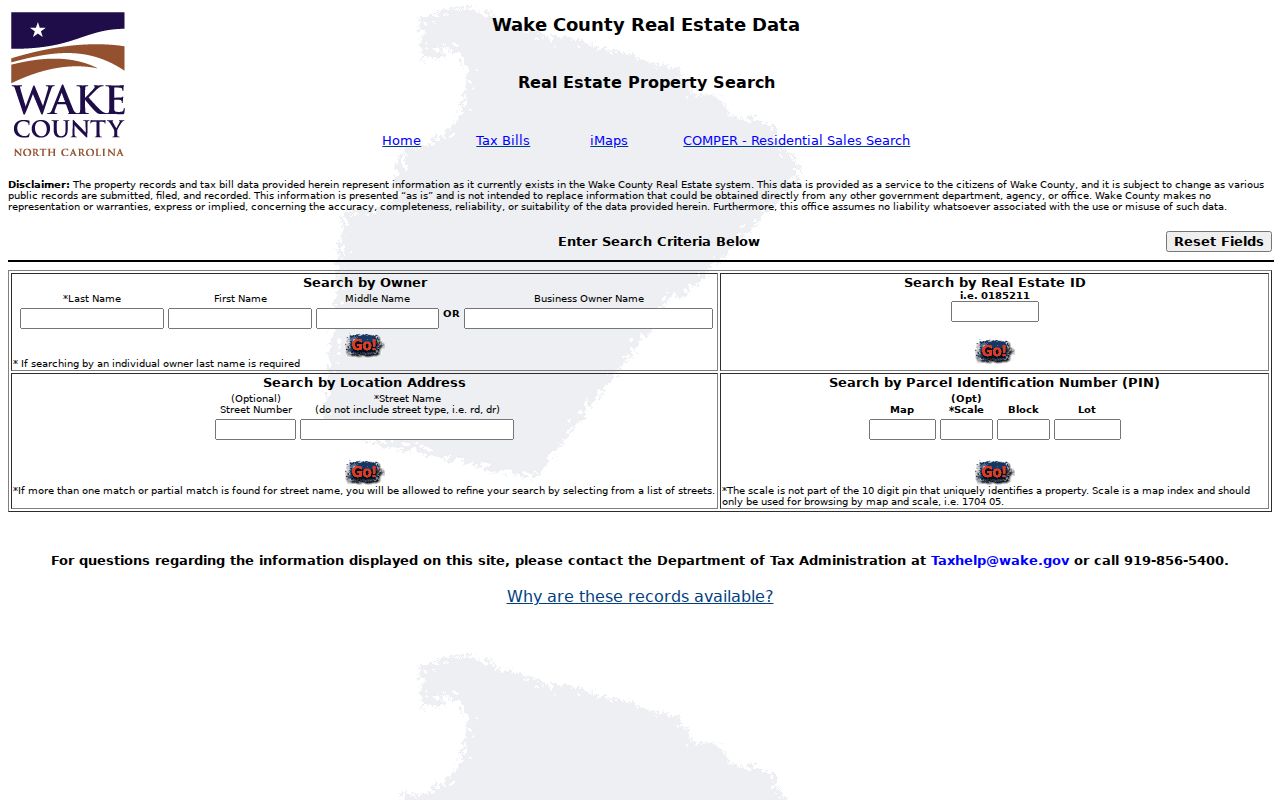
Open a likely match and record its identifiers before moving to a deed image. That makes it possible to distinguish two owners with the same name and to return to the exact parcel later.
| Field label | Type | Required | Options / format notes |
|---|---|---|---|
| Search | Text / autocomplete | No | Real Estate ID, owner, street name, or parcel ID |
| Owner | Name search | No | Use surname or organization; try documented variants |
| Street Name / Address | Text | No | Abbreviations may affect matching |
| REID | Numeric text | No | Wake Real Estate ID |
| PIN / Parcel ID | Text | No | Published parcel identifier |
The official Wake County and Raleigh iMAPS viewer adds boundary and district context to the same property trail.
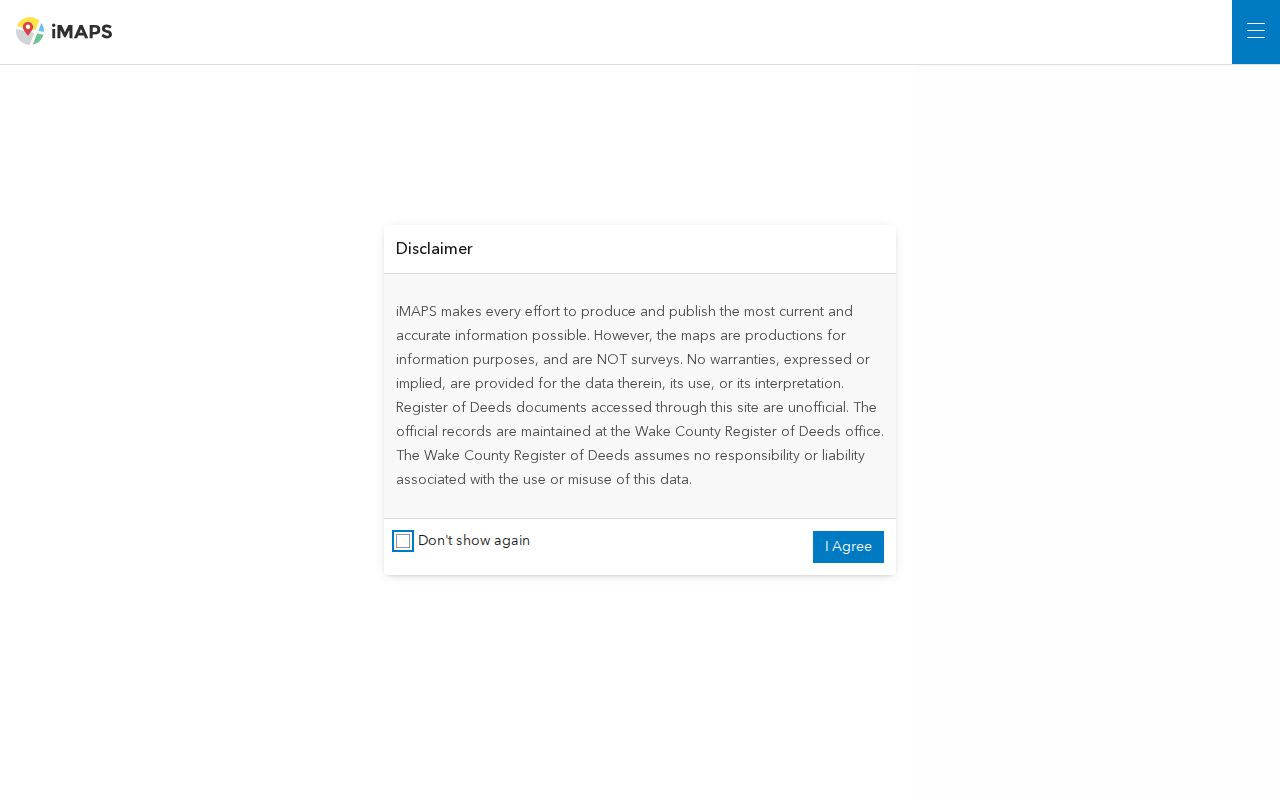
If an address fails, try the street only, a directional abbreviation, PIN, REID, or the map identify tool. The map helps route later permit and annexation research, but it is not a survey.
Wake County Deed Party Lookup
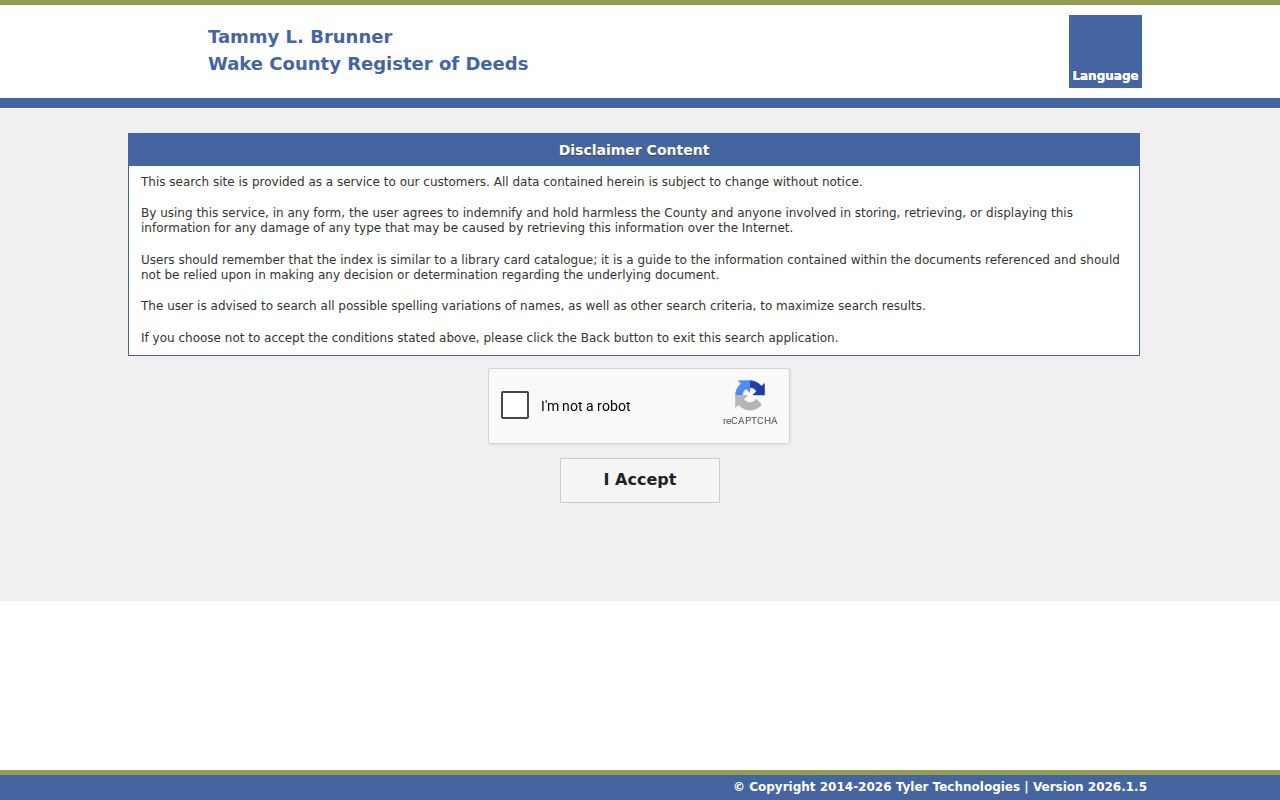
A parcel’s deed book and page open a chain of recorded names. The modern Register system searches parties, instruments, recording dates, and document locators after the user accepts its disclaimer. The office calls the index a catalog. Search all documented spellings, then read the underlying instrument because an index entry can shorten a name, omit a party, or describe only one step in a later release or correction.
The Wake Register self-service entry is the modern route for indexed land records.
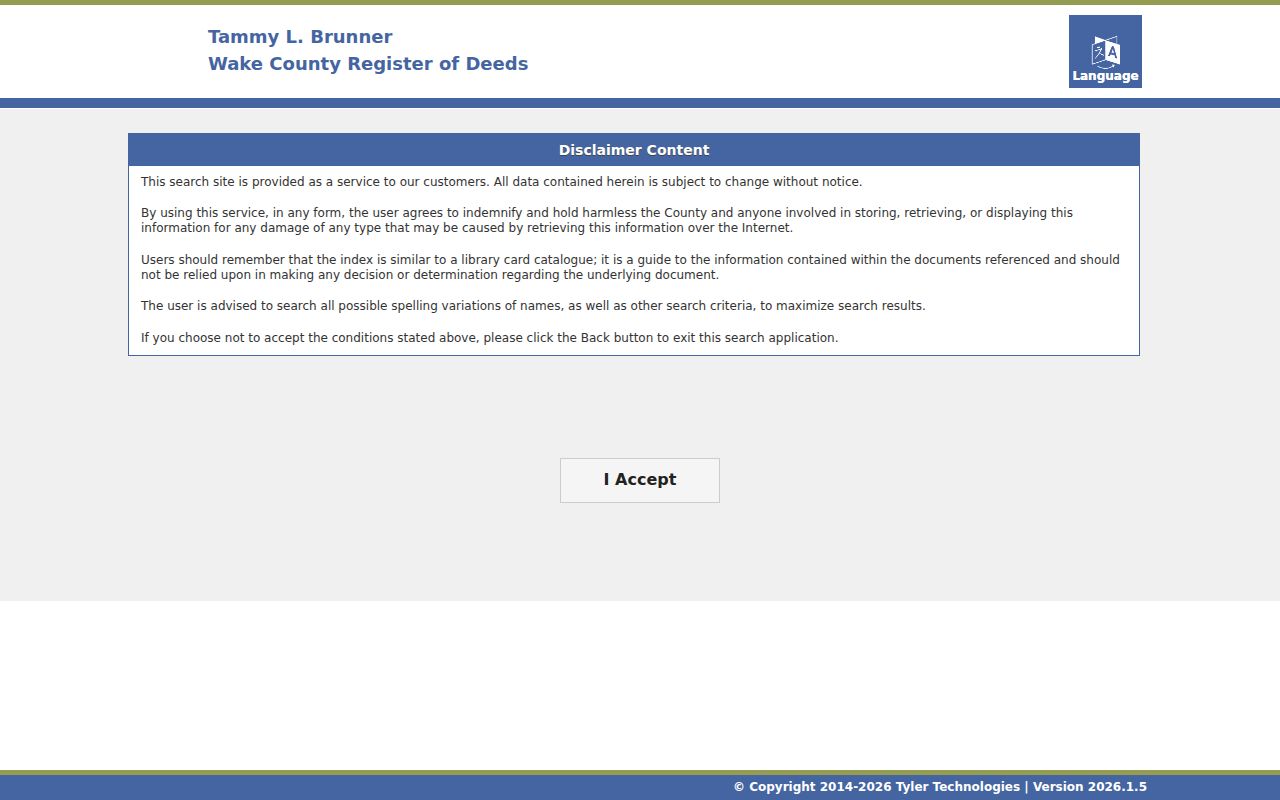
Collect the recorded date, instrument type, party roles, and book-page or document number. A grantor transfers an interest; a grantee receives it. Those roles do not by themselves show current ownership or occupancy.
- Index
- A finding aid that points to a filed document.
- Instrument
- The recorded deed, lien, plat, release, or other underlying document.
- Book and page
- The volume locator used to retrieve a recorded image or office copy.
- Certified copy
- An office-authenticated copy, distinct from a screen print or plain image.
Wake County Court Name Lookup
Wake District and Superior Courts use North Carolina’s statewide eCourts Portal. Smart Search accepts a party name or case number, while advanced controls can narrow the county, case category, status, and date. Results may show a case caption, number, location, type, status, filing date, party roles, hearings, events, and dispositions. Document images are not uniformly open online.
The eCourts Smart Search screen became the statewide current-case route after every county completed conversion on October 13, 2025.
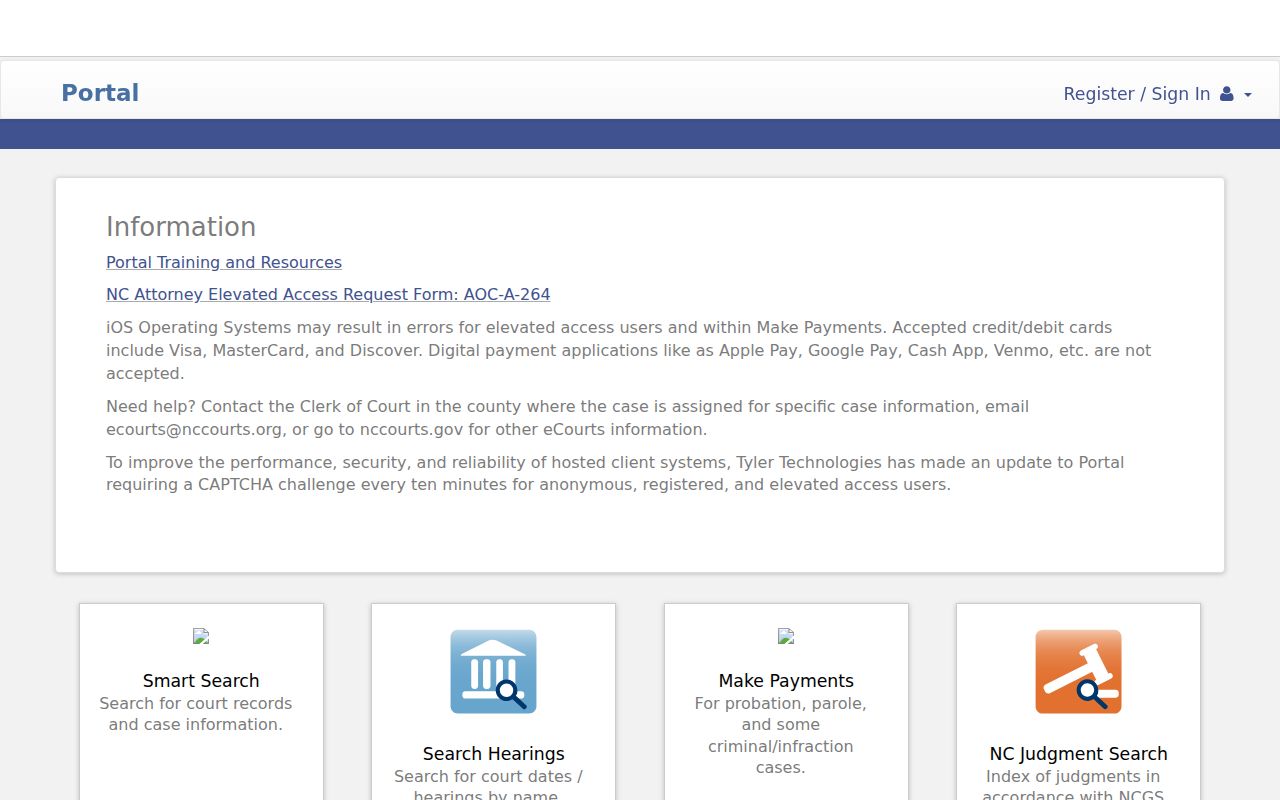
A portal entry is only the locator. Public self-service terminals can search court data, and the Wake clerk supplies the electronic or paper case file, ordinary copies, and certified copies. Older files may need staff retrieval. Sealed, expunged, juvenile, and adoption matters do not appear as ordinary public cases.
| Record trail | Online locator | Authoritative fallback |
|---|---|---|
| District and Superior cases | eCourts Portal | Wake clerk terminal and case file |
| Estates and special proceedings | eCourts where available | Clerk estate or special-proceedings file |
| Divorce | Public case search | Clerk judgment and pleadings |
| Federal cases | PACER | Federal clerk for the Eastern District of North Carolina |
Wake County Voter Record Trail
The North Carolina voter tool can help distinguish names by county, status, year of birth, municipality, precinct, and districts. It requires first and last name plus at least one status choice; middle initial, year, and county narrow the result. A profile can also display party, registration date, polling place, sample ballot, and participation method. It never reveals how anyone marked a ballot.
The NCSBE individual Voter Search shows the name and status controls used for a Wake County lookup.
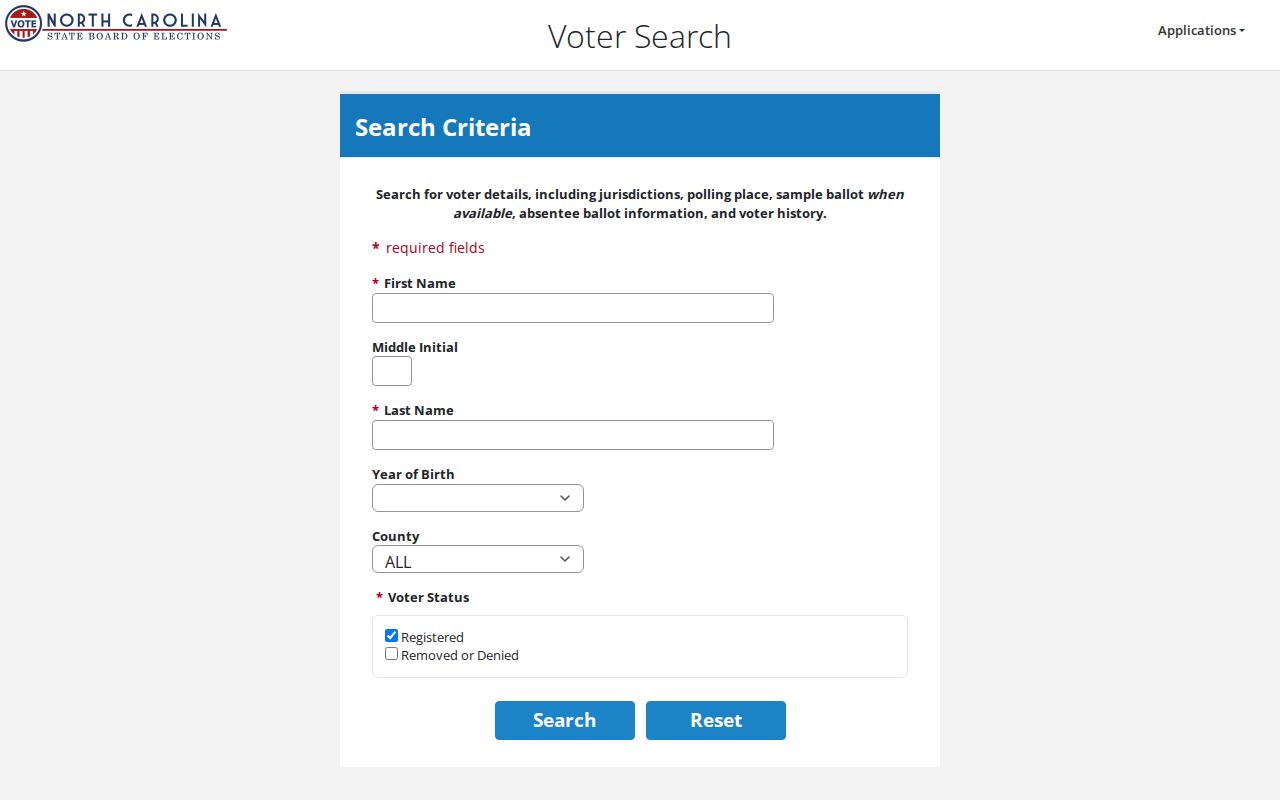
A nonmatch can result from spelling, a former name, another county, recent processing, or the selected status. The downloadable public files offer dated snapshots and more fields, but omit confidential identifiers. The full end-to-end process appears with Wake County voter registration.
Wake County Vital Record Search
The Wake Register of Deeds handles Wake birth and death certificates and marriage certificates for licenses issued there. North Carolina Vital Records supplies the statewide search route for registered births, deaths, fetal deaths, marriages, and divorce event records. The Clerk of Superior Court, not Vital Records, keeps the actual divorce judgment and pleadings. Older marriage records remain with the Register that issued the license.
Certified copies are limited by N.C.G.S. §130A-93 to listed relatives, authorized representatives, and people who meet the statute’s legal-interest terms. Uncertified copies may be available with required redactions. North Carolina law does not use a simple rule that all births open after one fixed span and all deaths after another.
The North Carolina Vital Records portal provides a statewide service path.
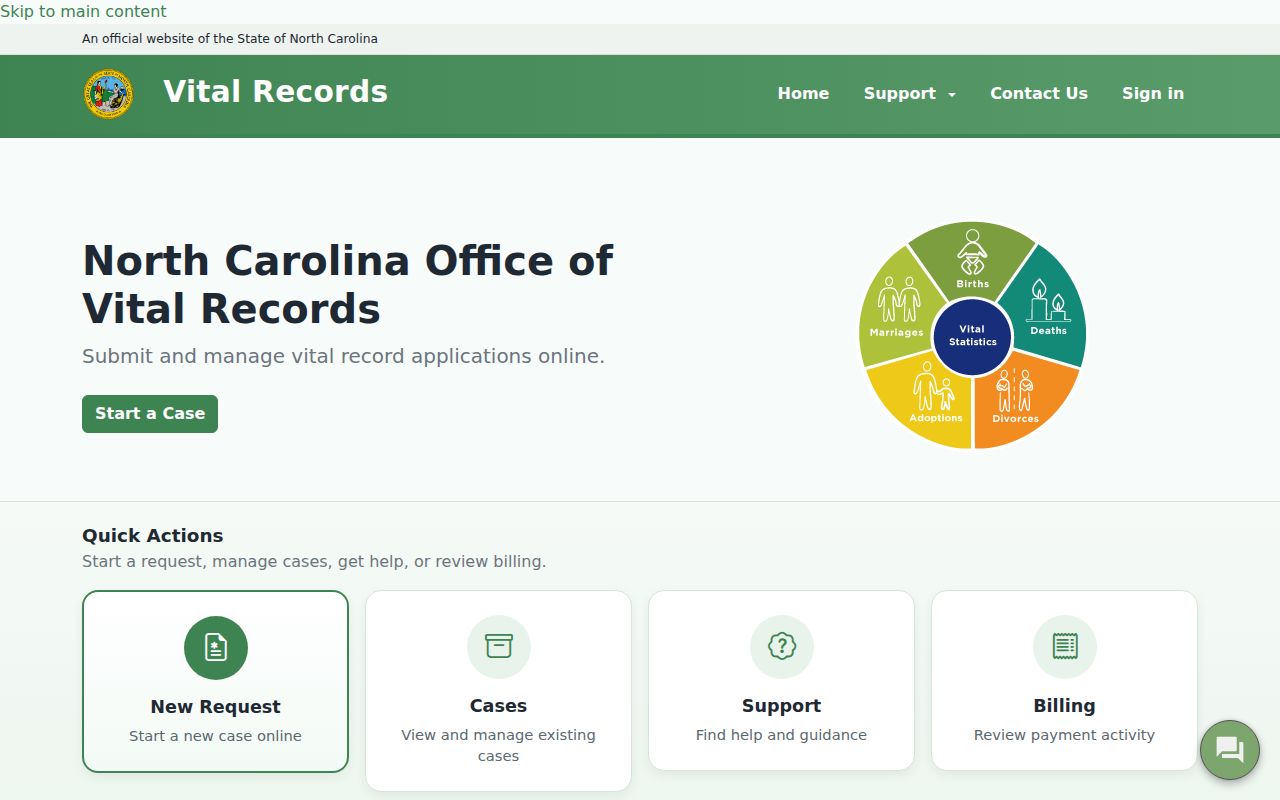
For a missing certificate, use the State Archives county guide, church registers, newspapers, cemetery records, probate files, or delayed-registration material. These can support family history, but they do not replace a certified record when formal proof is required.
Note: A Wake marriage certificate follows the county that issued the license, which may differ from either person’s home county.
Wake County Business Name Search
A company name can become a person lead through the North Carolina Secretary of State entity search. Search an entity or individual name, then read the official filing for a registered agent, officers or other listed roles, and filing addresses. For assumed names filed from December 1, 2017 onward, the statewide assumed-name search can identify the proprietor or entity and counties tied to the filing. Earlier assumed-name certificates remain a Register of Deeds trail.
Business and parcel records work well together. An entity shown as the tax owner is not a license to guess who occupies the site. Instead, move from parcel owner to the entity filing, then back to the recorded deed or relevant permit. Occupational licenses require the specific North Carolina board because the state has no single portal for every profession.
| Official source | Useful name evidence |
|---|---|
| SOS entity filing | Entity name, registered agent, listed officials, filing address |
| Assumed-name record | Business name, proprietor or entity, filing county |
| Professional board | Licensee name, number, status, and published discipline |
| Parcel and deed | Recorded ownership, transfer, and legal description |
Note: A registered agent accepts legal service but is not necessarily the owner, manager, or person located at a Wake business address.
Wake County Address Custody Puzzle
A Raleigh, Cary, Apex, or Wake Forest postal line does not settle which local government holds a permit, planning case, or police record. Wake contains incorporated towns, unincorporated areas, satellite annexations, and extraterritorial planning jurisdictions. Use the parcel and iMAPS boundary layers first. County deeds, taxes, elections, and court custody remain county based, while municipal records follow the government that created them.
This geography also explains why three people can be tied to one place without contradiction. A deed names a title holder. The tax roll may send mail to someone elsewhere. A reverse directory can list an occupant at that street for a particular year. Permits can name an owner, applicant, or contractor. Keep each role and date attached to its source instead of merging the names into one identity.
Note: Annexation maps and staff reports can bridge the shift from an older unincorporated record trail to later city permits and minutes.
Wake County Library Name Trails
Olivia Raney Local History Library is Wake County’s noncirculating local-history branch. Its catalog can be searched by keyword, title, author, subject, series, or advanced fields, then filtered to that location. Holdings include guardians’ accounts from 1817 through 1947, court orders and decrees dockets from 1878 through 1965, plats and maps, local newspapers, yearbooks, and Raleigh suburban or reverse directories.
The Wake County library catalog and Olivia Raney location provide the entry point for this search.
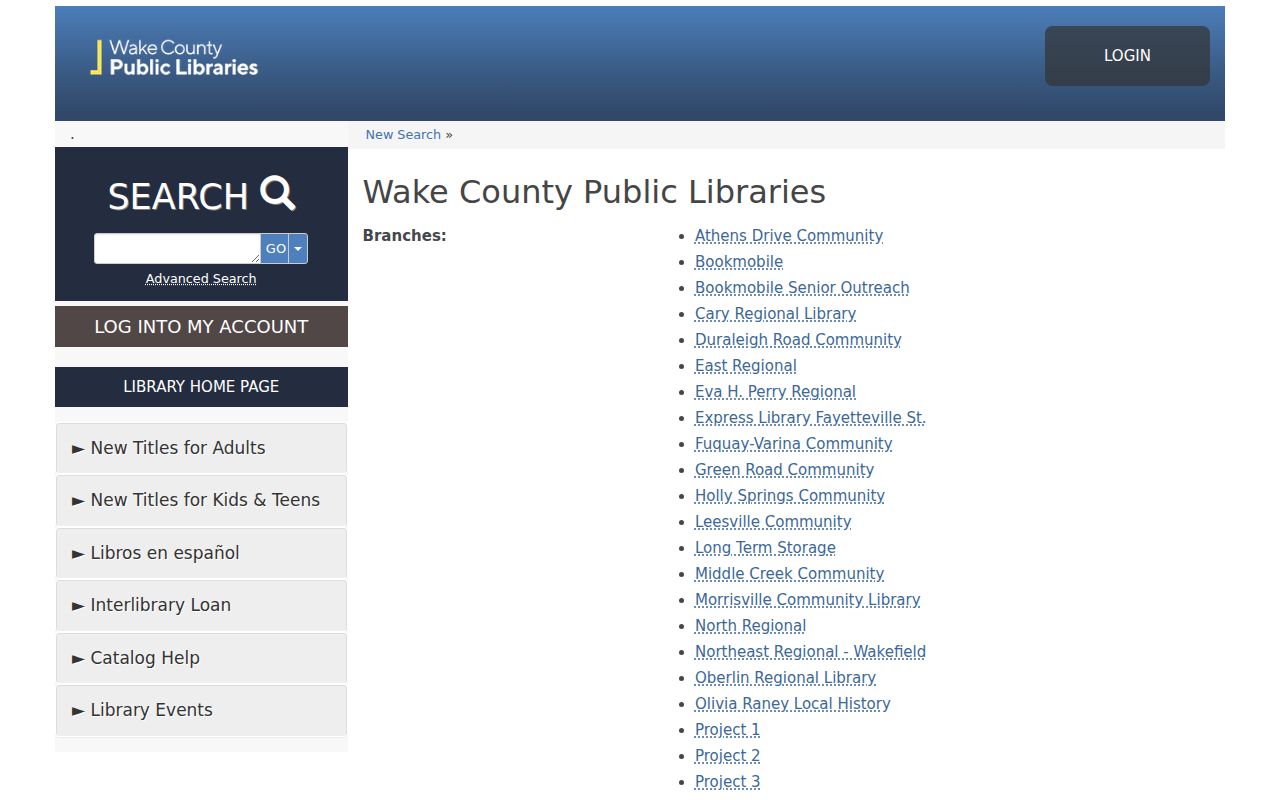
Ask for a collection title, volume, reel, or year rather than a broad surname search. A reverse directory begins with an address and reports a listed occupant, while a tax roll begins with ownership. Cataloged suburban and reverse volumes reach from the 1980s into 2024 for selected years, making them useful for both older and fairly recent address research.
Wake County Search Source Choices
Official records and commercial compilations serve different purposes. Government indexes identify a custodian, record date, and document locator. Commercial services may combine public and purchased data, but they can merge namesakes, keep stale addresses, or hide the source. Treat any compiled result only as an unverified lead. Return to the county, court, state board, library, or archive before relying on it.
Free web access is often enough to locate a record. A terminal, staff retrieval, or certified copy becomes useful when the index lacks the needed image or proof.
| Choice | Strength | Limit |
|---|---|---|
| Official online index | Free or low-cost locator tied to a custodian | May omit images, old files, or protected fields |
| Counter or public terminal | Direct access to local indexes and retrievable files | May require a visit or staff retrieval |
| Library or archive | Historical directories, microfilm, maps, and finding aids | Some items are noncirculating or available only on site |
| Commercial compilation | Quick multi-source lead | Provenance, freshness, and identity matching may be unclear |
Lawful use only. Public access does not permit stalking, threats, harassment, identity misuse, or attempts to defeat a protected address. Stop if a search would put someone at risk.
Note: Save the issuing office, record date, and stable identifier before using any compiled result as a lead to an official source.
Wake County Search Fallback Chain
When a portal has no result, change one variable at a time. Try a surname-first form, suffix, middle initial, compound surname, or documented transliteration. Remove punctuation from an entity name. Narrow the county, date, record type, street, school, or department. For land research, switch from a modern address to PIN, REID, subdivision, lot, book and page, or an adjoining owner.
Next, move offline. The clerk terminal and case file may hold more than the court web display. Register staff can retrieve an instrument from a document locator. A tax office can address historical parcel cards or datasets not posted online. Olivia Raney and the State Archives cover microfilm, paper volumes, and predecessor-county records. Chapter 132 requests should name an existing record series, date range, identifiers, and preferred electronic format. Agencies do not have to create a new report.
Wake County formed in 1771 from parts of Cumberland, Johnston, and Orange counties. A person from the earlier Wake area may belong in one of those predecessor record groups. That is a custody issue, not proof that the person disappeared from the historical trail.
Wake County Historic Name Index
The Consolidated Real Property Index reaches eighteenth-century Wake deed books and includes searches for unique names and enslaved people. Its dedicated Enslaved Persons search can search all fields or narrow by date, book, page, grantor, grantee, or an enslaved person’s name. Results carry a record ID, date, book, page, document ID, indexed parties, and transcribed names. At research inspection, it contained 2,156 entries across 144 pages, with displayed dates as early as 1780.
The Wake historical deed index opens the older book and name routes.
This purpose-built index exposes names that ordinary grantor and grantee fields can hide. A document ID links the transcription back to a county, book, page, and available image. Variant spelling and incomplete historic indexing still make image review essential.
Wake County Search Privacy Boundaries
North Carolina privacy rules vary by record. The Address Confidentiality Program gives qualifying survivors a substitute address, and the actual address and telephone are protected by Chapter 15C and N.C.G.S. §132-1.1(d). Public voter data excludes a birth date, Social Security number, driver-license number, specified registration-source data, and a military-overseas voter’s email. A voter signature may be viewed but not copied or traced.
Protected identifiers such as Social Security and financial account numbers have a separate redaction route under §132-1.10. Sealed and expunged cases, juvenile records, adoption files, personnel files, and criminal investigation material also have specialized limits. An unwanted but lawful public fact is not automatically deleted. Correction begins with the original custodian and the exact document, parcel, case, or index entry.
For commercial profile removal, use the publisher’s own privacy process, keep confirmation, and recheck later. Never send more identity proof than the process requires. Correcting a source record may not automatically remove an older downstream copy.
Wake County Recording Alert Search
Wake County offers free name monitoring for newly recorded documents. The service can send an alert when a subscribed personal or business name appears in a later recording. It is useful for spotting an unfamiliar filing and checking its instrument number through the Register. It does not decide whether a document is fraudulent, prove title, replace title insurance, or block a recording.
The Wake Document Recording Alert enrollment page explains the county’s monitoring service.
Compare any alert or high-priced deed-copy solicitation with the free official deed and parcel indexes. Use the book-page, document number, owner spelling, and property address. Then contact the Register through a number taken from its government page, not from the mailer. An alert is a prompt to verify the source record, not a finding about the person named.