
Wake County Voter Registration Lookup
The NCSBE Voter Search is the first stop for one person. Enter the required first and last names, select at least one status, and add Wake County or a birth year to narrow common names. Middle initial is optional. The tool needs JavaScript. It returns candidate names first, then opens the selected profile rather than exposing a browseable list of everyone in the county.
| Search label | Input | Needed? | Wake search notes |
|---|---|---|---|
| First Name | Text | Yes | Must match closely enough to return candidates |
| Middle Initial | Text | No | Use one initial when it helps separate similar names |
| Last Name | Text | Yes | Try a former name or spelling variation after a miss |
| Year of Birth | Dropdown | No | Uses year only, not a full birth date |
| County | Dropdown | No | Select Wake to limit statewide candidates |
| Voter Status | Checkboxes | Yes | Choose Registered, Removed or Denied, or both groups |
A miss is not proof that no record exists. A recent filing may still be in process, the person may have registered in another county, or the chosen status may hide the result. Retry with less detail and both status groups. If the profile still cannot be resolved, the Wake County Board of Elections can check local processing and corrections.
Note: Use the fewest fields that separate the person, then confirm county, year, and status on the resulting profile.
Six Wake County Voter Profile Panels
North Carolina organizes each public profile into six functional panels. The official voter profile guide explains what each panel means. Voter Details gives the county, status, registration numbers, party, demographic entries, registration date, and an NCDMV customer indicator. Jurisdictions lists the precinct and federal, state, court, county, city, ward, and school districts that apply.
Voting Locations names the next Election Day site and supplies county-board contact details. Sample Ballots identifies the ballot version available for the voter. The mail or early-voting panel reports absentee status, type, return date, method, and status. Voter History lists the election, voting method, county, and primary ballot category. These are administrative facts, not marked choices.
The state’s official voter-profile field guide shows how those parts fit together:
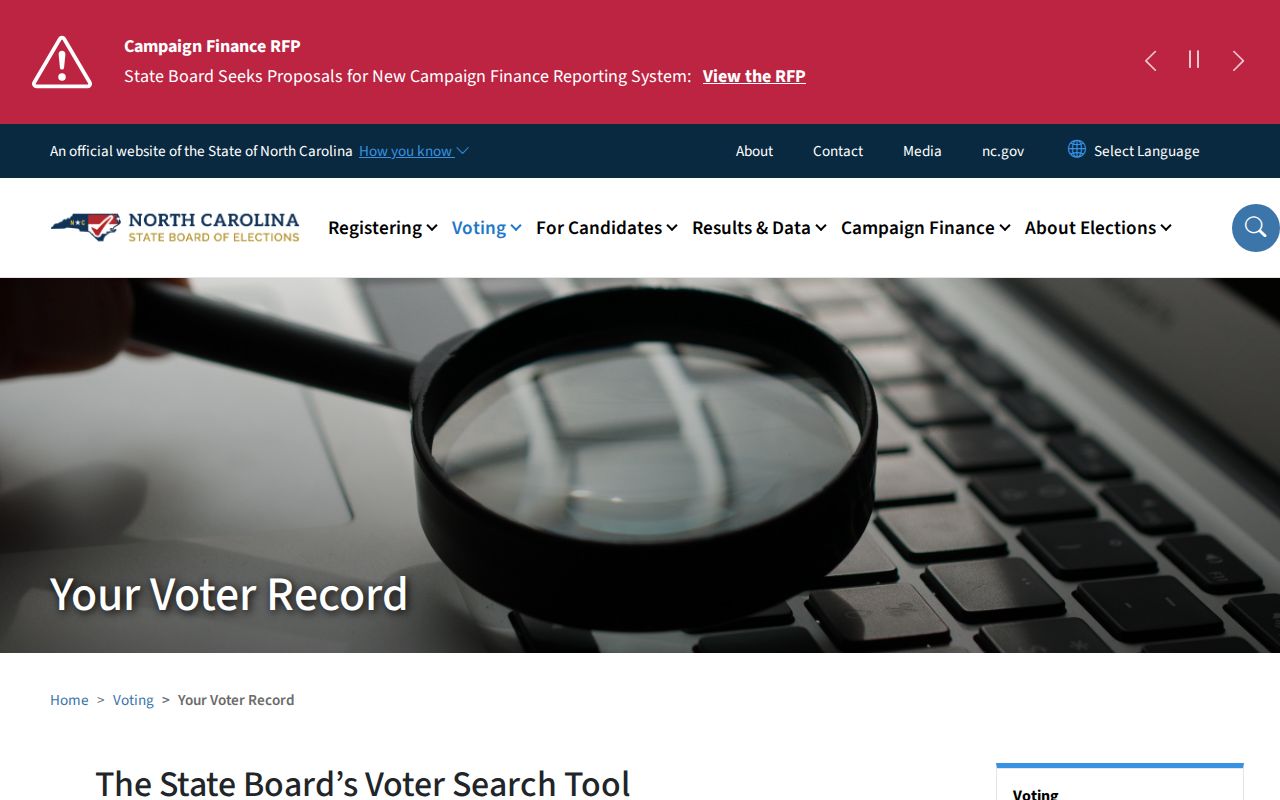
The six-panel structure helps distinguish a current polling assignment from older participation and registration details.
What North Carolina Voter Records Reveal
Most registration data is public under N.C.G.S. §163-82.10 and the state public-record framework. A Wake County profile can show a name, status, party, registration date, residence information, precinct, districts, polling site, sample ballot link, and participation history. The downloadable file adds coded fields and status reasons that are useful when a reader needs a dated, structured record.
| Identity keys | Name, county registration number, and statewide NCID |
|---|---|
| Registration | Status, status reason in files, party, and registration date |
| Geography | County, precinct, municipality, and applicable voting districts |
| Voting access | Polling site, site details, and sample ballot version |
| Participation | Election, method, county, and primary ballot category |
| Demographics | Public application categories included in the profile or file |
Some fields stay closed. Section 163-82.10 withholds Social Security numbers, birth dates, driver-license numbers, the registering public agency, and a military-overseas voter’s email. A signature may be viewed but not copied or traced. Chapter 15C and §132-1.1 protect a program participant’s actual address and telephone number.
For the broader public-record setting behind those limits, the North Carolina Public Records Law supplies the general framework:
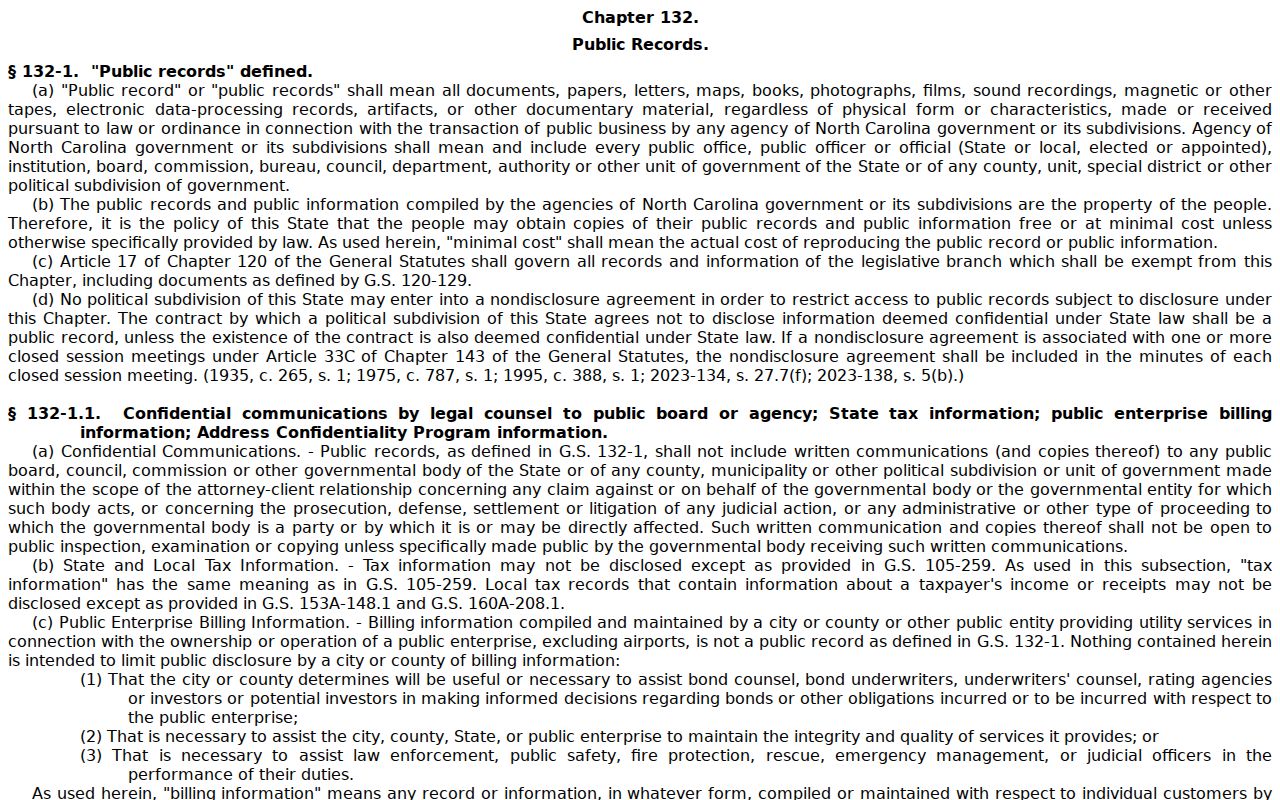
Special election and confidentiality statutes control where they are more specific than the general access rule.
Wake Voter History Is Not a Ballot
Participation history can confirm that a named voter took part in an election and show the method used, such as Election Day, early voting, absentee by mail, or provisional voting. It can also show the county and, for a primary, the party ballot category. It never reveals which candidate or issue the voter selected. Party affiliation also states registration choice, not support for a person on a ballot.
Timing matters. NCSBE warns that county participation uploads may take weeks after an election. An absent entry soon after voting is not a sound basis for a conclusion. Absentee-request detail also has timed confidentiality under §163-228 until the ballot is returned or the polls open on Election Day. Record the date checked and confirm late-changing details with the elections office.
Use public data lawfully. Public access does not permit stalking, threats, intimidation, or attempts to defeat address protection. Repeated tracking or electronic conduct can implicate N.C.G.S. §14-277.3A or §14-196.3. Never claim that participation or a primary ballot category proves a marked choice.
Accessing Wake County Voter Registration Files
North Carolina publishes the full set of allowed public fields as free downloads. There is no purchase form, account test, or fee for the posted files. The NCSBE voter data page offers a current Wake County file, statewide data, separate history files, historical snapshots, and layouts that define codes and columns. Current files refresh on Sunday evenings.
- Choose the dated source. Use the current Wake file for present records, a snapshot for a past status or address, and the separate history data for participation.
- Download its layout. Read the layout released with that file because column order, labels, and code meanings can change.
- Join with official keys. Use NCID across files from different dates. For files produced near the same time, county plus the county registration number is another state-recommended key.
- Preserve the file date. Keep the ZIP, TXT, or CSV source and note its release date before citing any row.
The NCSBE voter-data download page makes current and historical access visible:
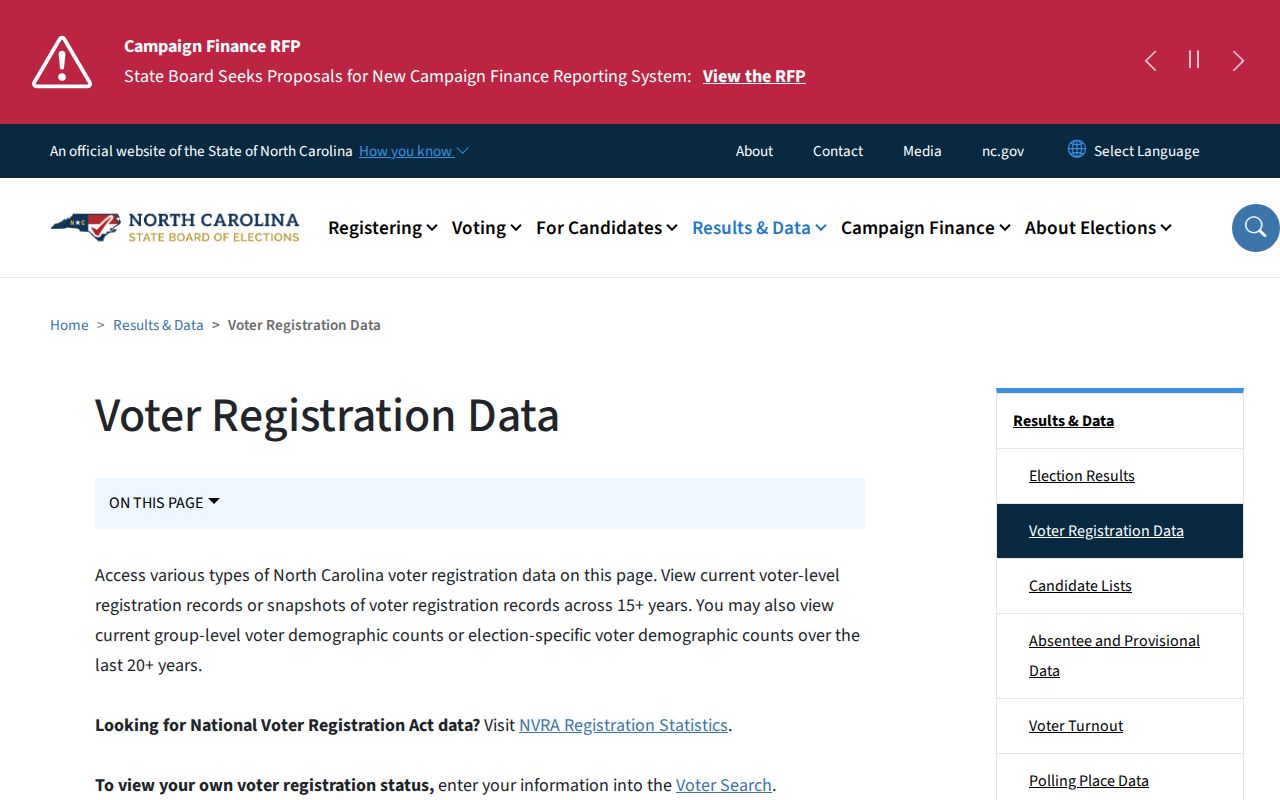
The file reaches beyond the individual profile while still excluding protected identifiers.
Reading Wake Voter File Fields
The public voter ZIP files contain registered, formerly registered, and incomplete or denied records as NCSBE defines them. Included columns cover status and reason, party, demographics, address, county, precinct, and legislative, judicial, and available local districts. Birth date, Social Security number, and driver-license number are excluded. History is separate and must be joined to the registration row.
This creates an important comparison. The individual lookup is best for one readable profile, polling details, and sample ballots. The free file is better for field definitions, many rows, dated snapshots, and longer study. NCSBE provides more than fifteen years of snapshots and more than twenty years of election-specific demographic statistics, while the public lookup centers on one person’s current profile.
- NCID
- The statewide identifier recommended for matching the same record across files produced at different times.
- Status reason
- The coded reason behind a category such as removed, which should be read with the matching layout.
- Snapshot
- A file fixed to a past date. It is historical evidence, not a statement of current eligibility or residence.
- Primary ballot
- The party primary in which participation occurred. It does not reveal any marked selection.
Note: Address and demographic similarities are not enough when names disagree; use the official identifiers and file layout instead of guessing.
How Wake Voter Status Changes
County boards update records after reported deaths, moves, felony sentences, and lack of voter contact through state and federal list-maintenance processes. “Inactive” does not by itself mean ineligible. “Removed” also covers more than one reason, so the status-reason field and file date are essential. The current public file omits removed voters whose most recent last-voted date is more than ten years old.
The state voter registration FAQ explains the public and confidential split as well as maintenance rules:
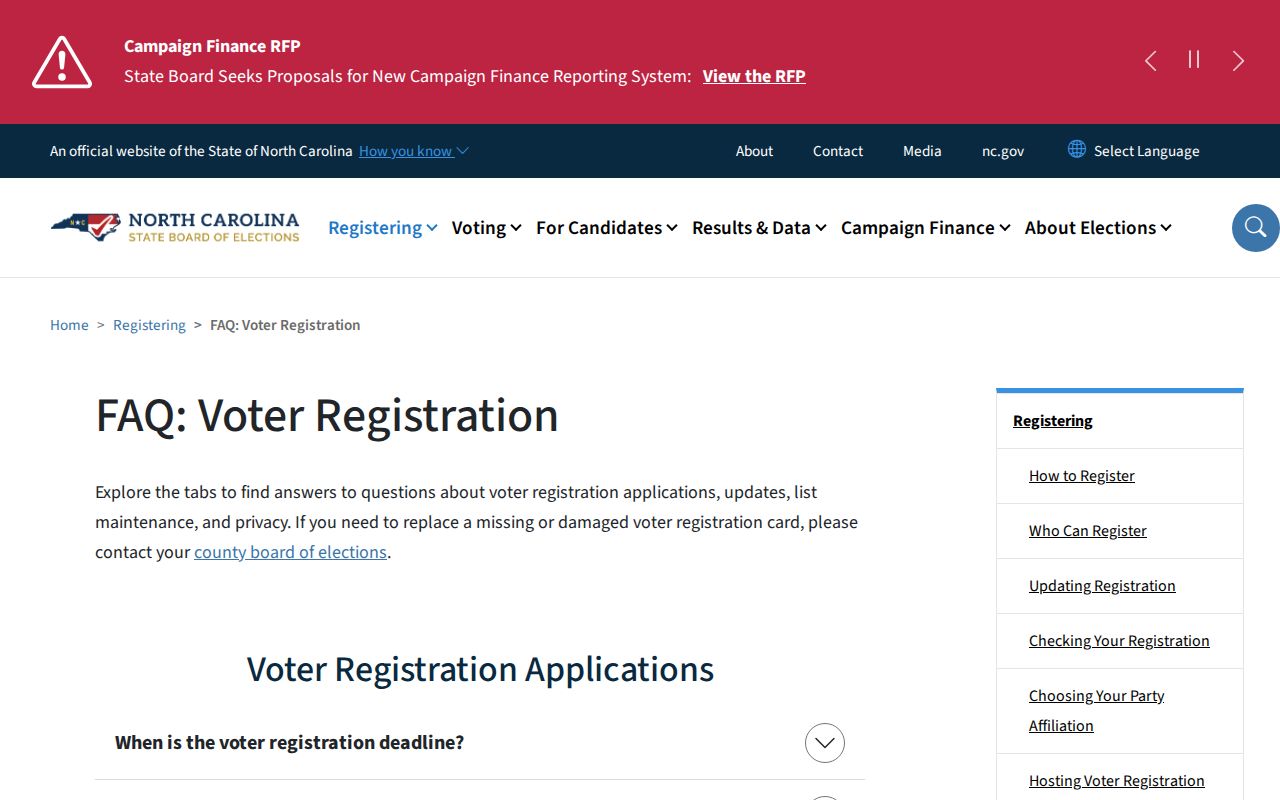
A dated snapshot can document an earlier status without turning it into a claim about the person today.
Wake County Voter Office Channels
The Wake County Board of Elections administers local records across the whole county. Contact it to correct a profile, inspect allowed material, or resolve a precinct question. County, municipality, precinct, and district fields are better jurisdiction tests than a postal city name. That distinction matters across Raleigh, Cary, Apex, Wake Forest, and unincorporated Wake.
The Wake County Board of Elections page is the official local contact route:
For statewide layout and production questions, contact NCSBE at P.O. Box 27255, Raleigh, NC 27611-7255, 919-814-0700, or elections.sboe@ncsbe.gov.
The complete access path is broader than either office alone. Use Voter Search for a human-readable profile. Download current Wake data or a historical snapshot for structured research. Join the separate participation file with official identifiers. Ask the county board about corrections and inspection. Ask NCSBE about layouts. Older registers require archive and library catalogs.
Historical Wake County Voter Rolls
Digital snapshots supply the recent trail, but they do not replace older poll books or registration material. Search the State Archives county-records guide, Wake Board retention holdings, and library or archive catalogs. No official catalog page was found with one complete Wake poll-book year run, so request the series, date span, precinct, format, and location before planning an onsite review.
Wake County formed in 1771 from Cumberland, Johnston, and Orange counties. That boundary history matters when election-era or residency research reaches before Wake’s own record groups. For later work, pair a dated roll with directories, deeds, newspapers, or probate records rather than treating one registration entry as proof of a continuous address.
Begin the archival request with a full name, approximate year, and known precinct or community. Ask whether the service copy is paper, microfilm, or digital, and record the collection title and page. Nearby years may bridge a missing book. When a name is absent, check spelling variants and boundary changes before deciding that the voter was not recorded.
Note: Cite the exact poll book, register, snapshot date, or file name so another researcher can distinguish historical evidence from a current profile.